What Is Print-On-Demand?
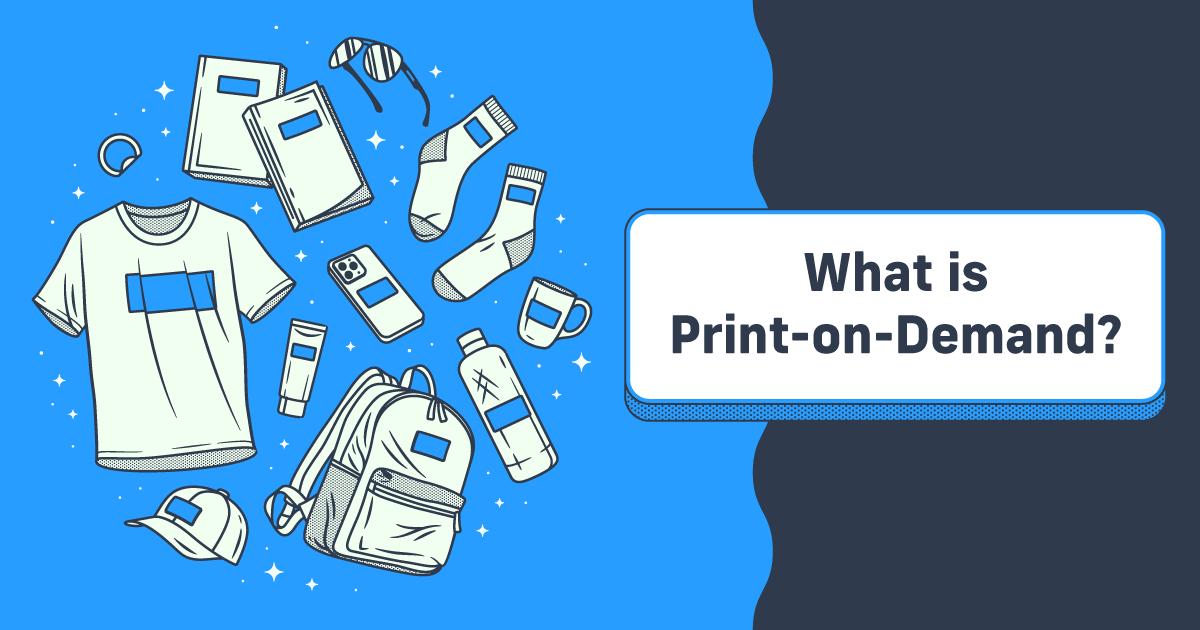
Print-on-demand, or POD, is a printing method in which a book (or other products like mugs, shirts, hats, pens, etc.) is manufactured only after an order is placed. Instead of printing hundreds or thousands of copies in advance, an author or creator produces a design that can be printed as individual copies as customers buy them, or in small batches as needed.
The Library of Congress defines print-on-demand in similar terms: copies are usually printed only when ordered, so inventory does not sit in a warehouse (or your garage).
Print-on-demand is not the same as self-publishing or dropshipping. It’s helpful to think of these three elements as integral parts of an individual creator business, but knowing the differences is important.
Print-on-demand describes how the product you created is manufactured. Instead of large offset print runs, POD allows for book-of-one printing. Coupled with automated fulfillment, individual authors and creators can publish, sell, and ship books to their readers without ever having to physically touch that book.
Self-publishing describes who manages the publishing process. In traditional publishing, a large publishing house owns the process. Self-publishing is when you do the work to prepare and publish your content.
Dropshipping is a descriptor of the fulfillment process. Historically, a publisher would print a run of books, often 10,000 or more copies. These would be shipped to a warehouse and then shipped again to retailers for sale. Online sales might ship directly from the warehouse. When a product is dropshipped, it is sent directly from the manufacturer to the buyer, bypassing warehouses and logistics.
How Does Print-on-Demand Work?
Print-on-demand is great for individuals and businesses because it’s cost-effective, low-risk, and gives authors and content creators extensive control over their products. It’s also the most environmentally friendly way to print books—a significant factor in helping Lulu become a B Corp-certified printer!
Most print-on-demand orders follow this process:
- Create Files - Print-on-demand processes require a file including unique designs. For books, a complete interior file (a multi-page PDF) and cover file (a single-page PDF) are necessary.
- Upload the Files - Select the appropriate trim size, paper, ink, binding, and cover finish for your book. Then upload the files for validation to ensure they match your specifications and meet printer requirements.
- Review a Proof - You should always order a proof copy before making your book available for sale. Lulu provides a digital proof after you upload your files, but it is still smart to see the physical book your readers will receive before you start selling it.
- Set up Sales Channel(s) - With Lulu, you can sell in a variety of ways, including our bookstore, through retailers like Amazon, from a connected ecommerce store, or from your website, newsletter, or social profile. I’ll touch on selling options a little later in this post.
- Customer Orders - Once the order is placed, the files are transferred to the printer, where the book is printed, bound, packaged, and dropshipped to the customer.
Why Use Print-on-Demand for Books?
I’ve been asked that question (or some form of it) dozens of times over the last 10 years. Over that time, I’ve come to believe there are three reasons that POD is appealing to modern creators.
- Versatility - Anything you can create a file for (interior and cover), you can print. Paperbacks, hardcovers, special editions, one-off covers; literally whatever you want.
- Control - Print-on-demand books can easily be updated with a simple file upload, allowing you to correct typos, add new information, and generally have more active control over your publication.
- Money - It’s more profitable to sell direct and avoid giving a retailer a cut of your profits. You’ll earn more, meaning more freedom to write your next book and create a sustainable business.
The per-book cost will inevitably be higher than ordering 10,000 copies from an offset printer, but you will have more direct control over what gets printed and when. You do not have to predict demand before publishing. That makes print-on-demand useful for authors, independent publishers, educators, businesses, nonprofits, and creators serving specialized audiences.
Versatility and control—from what I’ve observed—are the most important reasons creators and businesses will use print-on-demand over offset and warehousing. More specifically, POD allows for some options that printing a bulk of books cannot:
- Avoid Inventory - Print the quantity you need, as you need them. That could be one book per buyer, printed when they order. Or you could collect orders and use Lulu’s Order Import tool to upload multiple orders at once and have them fulfilled directly to your readers.
- Test New Products - When a traditional publisher decides to launch a book, they have a team to design, format, edit, and publish it. They are gambling that an audience for the book exists. With POD, you can create a book and test it with your audience without investing in large print runs or storage. And if it doesn’t sell, you're not left with boxes of books on hand.
- Trial Price Points & Formats - Similar to testing new products, you can offer alternative versions of your existing books or trial different price points to see what works best for your readers. It won’t cost you anything to adjust the price or offer a hardcover version, and you’ll have the opportunity to gather data on which formats your audience prefers and how much they’re willing to pay.
- Backlist Books - In case you weren’t aware, backlist titles are the most important source of income for authors and creators. An Author’s Guild report found that its surveyed members earn around 50% of their income from their backlist, while Circana data indicates around 70% of units sold come from authors’ backlists.
- Update Files - POD allows creators to replace files and revise published projects. Make minor corrections, such as fixing spelling or grammar, simply by updating the file for your book. Each new printing will use the new file, ensuring your readers always have access to the most up-to-date version of your books.
POD also works well for products with steady but unpredictable demand. A training manual may sell a few copies each week. A backlist title might sell irregularly for years. A workbook tied to a course might only be needed when a new group enrolls. With print-on-demand, it doesn’t matter how many or how often you need books printed.
Print-on-Demand vs. Offset Printing
Print-on-demand books are usually printed with digital printers, allowing for easy file uploading, normalization, and printing. Offset printing requires more setup, including printing plates and press preparation. The difference comes in per-unit economics. Digital printing is more expensive, while offset printers can more easily offer discounted print costs per book as the quantity printed increases. Digital printing avoids the setup and time needed to print, package, and ship thousands of books, making it better suited to short runs and individual orders.
There is no universal quantity at which offset becomes cheaper. Press costs, paper, ink, run length, finishing, labor, and delivery schedules all affect the calculation. A cost analysis published by PRINTING United Alliance found that comparisons between digital and offset printing depend on multiple assumptions.
What Does Print-on-Demand Cost?
POD removes the need to prepay for a large print run, but the per-book cost will be higher. Shipping, taxes, and—depending on the sales method—fulfillment or ecommerce fees may also apply.
Page count, trim size, ink, paper, binding, and cover finish all affect the manufacturing cost—which is true for print-on-demand and offset printing. A full-color hardcover will cost more to produce than a black-and-white paperback of the same length.
Lulu’s book pricing calculator is a simple and fast way to estimate the printing costs for on-demand books. You can also see shipping, bulk pricing, and potential revenue before you publish.
It’s important to consider the entire cost of a book when comparing POD to offset. Yes, the unit cost for offset will always be lower. But there are other expenses, like warehousing and shipping, that are not factored in when looking at the cost to print. And you’ll be buying thousands of copies to get to the lower price.
Print-on-demand shows you the entire cost, including printing and fulfillment, upfront.
You accept a per-book cost that will be higher than a large offset run in exchange for avoiding a large upfront expense and the risk of unsold books.
Selling and Fulfilling Print-on-Demand Books
Another key difference between offset printing and print-on-demand is the selling and fulfillment. Offset printers are JUST printers. You send your print files to them along with a quantity and a payment. They print the books and ship all of them to a location you specify.
Print-on-demand companies, due to the nature of book-of-one printing, are obliged to fulfill directly to the reader. And since selling single books at a time demands a sales channel, POD providers fold in retail options.
When considering how you’ll sell your books, Lulu offers the widest range of options. With Lulu, you can:
- Order copies for personal use, events, or in-person sales.
- Sell through the Lulu Bookstore.
- Make eligible books available through retail distribution.
- Sell through your own website using Lulu’s ecommerce and API tools.
- Fulfill pre-orders or crowdfunded orders with the Order Import tool.
Each sales channel serves a different purpose and caters to different audiences. Retail distribution makes eligible books available through established booksellers like Amazon and the Ingram network. This makes your books widely available, but harder to discover among all the other books available on retail sites.
Direct sales give you more control over pricing, branding, customer relationships, and the shopping experience. But there is some setup required, and you’ll need to manage customer relationships on your own.
Is Print-on-Demand Right for Your Book?
Print-on-demand is a great way to publish without holding inventory or paying for expensive offset print runs. It is especially useful for custom or personalized books, workbooks, manuals, course materials, photo books, journals, and niche publications.
If you intend to sell direct, need an affordable way to offer backlist titles, or specialize in personalized books, print-on-demand is the absolute best option. The increase in print costs is offset by the control, versatility, and savings in warehousing and fulfillment. The only time you should consider a large offset run is if you know the audience and expected sales will justify it. Otherwise, print-on-demand will always offer more options.