Content Marketing & First-Party Data
Cookies. A core feature of web browsing since the 90s. Likely something you never thought all that much about. That is, web cookies. I’m sure we’ve all thought about real cookies. I’m personally a Snickerdoodle fan.
Anyway, if you’re working to build an audience, you have to think about cookies. They’re a key piece of the way the internet works and vital to helping you understand your audience.
Why? Let’s start by breaking down where cookies come from and what they do.
What Are Web Cookies?
At the most basic, cookies are information packets a web server creates and sends to a web browser. The cookie is held by the browser, usually until the session ends. And most importantly, the web browser will know to attach that relevant cookie for future use.
The cookie contains some information about you that will get used to improve your experience. Online stores use cookies to track what you have in your cart while you shop. Sites with a log-in will use cookies to keep you logged in across various site pages.
These cookies are stored on your machine, usually in a folder created by your browser, and accessed while you are on the web.
Why Did We Need Cookies?
Cookies broadly serve three purposes: session information, personalization, and tracking. There’s a lot of nuance that I’m not going to get into, but these three purposes encompass most of the ways you’ll interact with cookies.
- Session cookies hold information about your session. My example of keeping you logged in to a site while you navigate various pages is a session cookie.
- Personalization cookies are exactly what they sound like: cookies to store details to help personalize your experience. When you tell a site to remember your user name, that’s a personalization cookie.
- Tracking cookies are the ones that cause you to see ads for the products you most recently searched. The website stores that cookie and allows other sites that use the same tracking to see that information. Tracking cookies are also how websites track their users’ behavior—important information for any growing business.
The Difference Between First-Party & Third-Party Cookies
This is key. And thankfully simple.
A first-party cookie is placed in your browser by the site you’re currently visiting. A third-party cookie comes from some other site than the one you're visiting.
As I’m sure you can guess, first-party cookies allow for session data, personalization, and for the site to understand how you use it. Third-party cookies are largely used for advertising to you based on the sites you visit and your interests.
If you’ve ever wondered why those sneakers you were looking at on nike.com are suddenly being advertised to you on Instagram, blame the cookies.
What’s the Deal with Third-Party Cookies and Google?
Unless you manage your own website or are involved in SEO work, you might not know much about Google’s proposed change to third-party cookies.
A brief history: back in 2020, Google announced they were getting rid of third-party cookies for their Chrome browser. This change would have had a major impact on how sites gather information for advertising to you.
It’s important to note that Safari and Firefox, two other popular browsers, already block third-party cookies by default. So it’s not like there isn’t precedent to do this.
But because of Google’s existing marketing tools and their huge piece of the search market, there was a lot of pushback to removing third-party tracking by default. Earlier in 2025, Google walked back their plans, announcing they would continue to make third-party cookies the default.
That means those useful tracking cookies are still happening on Google. With a bit of a catch, though.
Privacy Regulations Impacting User Tracking
In recent years, the EU and some US states (particularly California) have introduced regulations to protect individuals’ data privacy and to force businesses that capture and track data to do so in more transparent ways. The most significant one, the General Data Protection Regulation (GDPR), requires that sites ask before applying any cookies.
This regulation technically only applied to nations within the European Union, but because of the nature of the web, sites have universally adopted some form of ‘opt in’ before they apply cookies. For example, here’s what the Lulu homepage looks like when you visit it for the first time (or through an incognito browser).
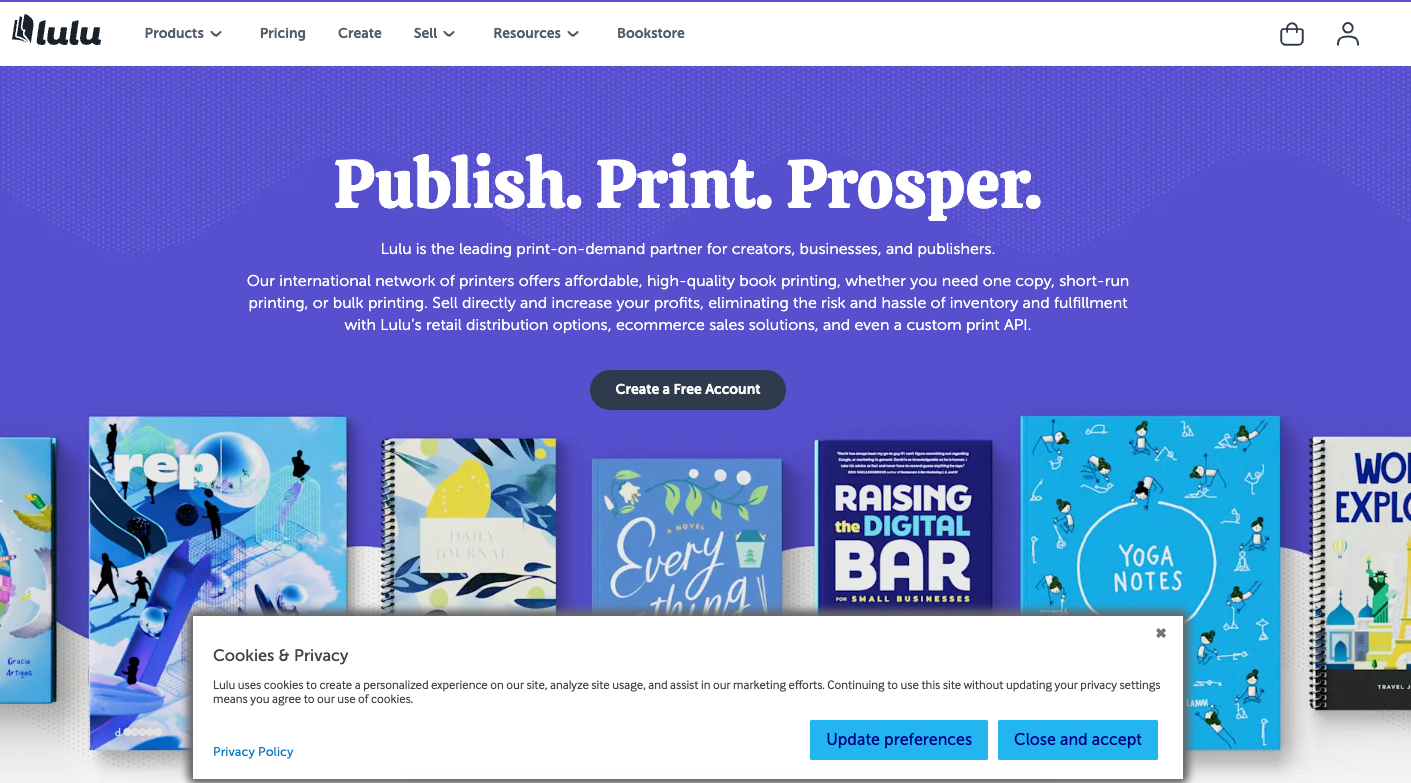
The consent banner allows you to opt in so that we can apply cookies or to manage which cookies we use. Some, like session cookies, are necessary for the site to operate. Others, like tracking cookies for marketing purposes, are not required. Consent managers like the one we built allow you to manage which cookies you allow.
All legitimate sites today have some form of opt-in to get your consent before they apply cookies. Not offering this option could lead to running afoul of GDPR, leading to potentially large fines.
Data privacy regulations like GDPR are a good thing. They give consumers and users control over which companies can access their data and what data they access.
For businesses and individual creators, these regulations are both a burden and a boon.
Content Marketing & User Data
Going back to my earlier explanation of cookie data, it breaks down like this:
- Third-party data is information a third party gathers about you based on activities you take on another website.
- First-party data is information a site gathers from you as you use it.
- Zero-party data is information you voluntarily give to the site you are using.
One of the most common and useful pieces of zero-party data is your name and email. If a user gives you those details, you can email them marketing materials and apply personalizations like ‘Hi Gary!’ instead of ‘Hi person using my site.’
Personalization builds trust; trust leads to returning customers who might even recommend you and your products to someone else.
First Party Data is Critical
GDPR makes it harder to apply third-party cookies, which in turn makes it harder to leverage paid advertising to find new customers. If a user isn’t letting Meta or Amazon scrape their browsing history, they’ll see fewer and less targeted ads.
For many, this is a relief. Having our activities monitored and used to market to us is not something many people are excited about. That means it is harder for us to ‘naturally’ come across new products and services unless we are actively searching for them.
BUT… that’s actually a good thing. It means the people who do find you and your products/services are actively looking for them. They want to know what you offer, how much it is, and if it’s the right solution for them.
Can you guess what this kind of consumer is also more likely to do?
Give you their information willingly.
So, in a world where advertising cookies are something we have to actively choose to engage with, the data people are willing to give you is more important than ever. That willingness shows they are interested in what you’re offering, opening the door to more specific, targeted marketing that speaks to their interests or needs.
The trick, then, is to find ways to encourage and reward people for offering you their information.
4 Ways to Earn & Respect Customer Data
Asking for and using your customer’s data is important and something you need to take seriously. So, to close us out today, I’ve got four methods we employ at Lulu and we’ve observed successful businesses and creators use to help inspire people browsing their site or searching to offer up zero- and first-party data.
1. Give Them a Reason
This might seem painfully obvious, but you should try to give people a reason to share their information with you. One popular thing to do is to offer access to a white paper, a chapter from your book, or some other piece of content in exchange for their name and email.
One great example of this tactic is Australian author Phoebe Garnsworthy. Her homepage has a banner offering you a free ebook in exchange for your name and email. If you’re interested in her work, a free ebook is a great way to learn more and it serves Phoebe’s marketing goals by adding more subscribers to her mailing list.

2. Be Transparent & Honest
When you ask for personal data, be very clear and open about how you’ll use it. Something like “Enter your name and email address to get the first chapter of my new book and updates on the full book release.”
Be clear and be direct. Then follow through on it. If you tell them you’ll send them updates about an upcoming book launch, do so. Don’t share a bunch of spammy marketing encouraging them to pay for a service or something else that they didn’t explicitly ask for information about.
You can gently offer up other products or services, but the primary communications you send should be tied to the promise you made when they offered their information to you.
3. Carefully Manage Their Data
This is twofold:
- You need to monitor and manage your lists to ensure you’re sending communications your subscribers are interested in.
- You need to make it easy for subscribers to unsubscribe and remove their personal data from your site.
Maintaining your list of followers and subscribers is a general task that you should do periodically. Look for folks that haven’t engaged in a long time or aren’t clicking through your content to see if there might be an adjustment you can make. Or maybe it’s time to suppress that follower and stop sending them content for a while.
But most importantly, anyone who has given you their information should easily and quickly be able to remove it. If you offer account creation on your site, make sure it’s easy for logged in users to request their data be removed. If you don’t offer a log in, then be sure to include a procedure, even if it’s as simple as them emailing you a request.
4. Create Valuable, Personal Content
Finally, create content people want. If you write blog posts that are well-optimized for SEO and are showing up in search results, you’re going to get some traffic.
But once that reader is on your site, you know the final goal is for them to sign up for emails (and eventually purchase a product/service from you). People only drop their email and name into a sign up box if they’re enjoying what you’ve offered and they want more. Remember that—you need to be continuously creating valuable content that speaks to your readers and their needs.
This is another way that zero- and first-party data can be useful.
If you’re asking your subscribers and fans for information about themselves, use it to guide your content.
Managing Data & Marketing
Cookies and access to data from people browsing the web will certainly continue to change and shift. Big retailers will always want to apply third-party cookies to enhance their advertising, but it seems likely that regulations like GDPR will also continue to build a barrier around our personal information.
For you and your content business, the most important thing you can do today is to build a list of followers/fans who willingly offer you their data. That severs any reliance on third-parties and creates a direct connection between you and that subscriber. Building those kinds of connections will be the path forward—for you and for consumers.
Direct relationships built on asked for and offered data are strong relationships. You might not have as much reach, but you’ll have a core group of people who are interested in what you do and want to hear from you. That is immensely valuable in today’s crowded digital landscape.

Your Free Lulu Account
Create a Lulu Account today to print and publish your book for readers all around the world