How Retail Book Distribution Actually Works
Do you dream of seeing your book on a shelf in your favorite indie bookstore? Can you picture it displayed next to other bestsellers on Bookshop.org? Have you already started working on your pitch for why your local library should add your book to their catalog?
Whether you’re independently published or traditionally published, there are ways to make these dreams a reality. But many authors focus on convincing bookstores and libraries to carry their book, while overlooking the most essential part of the process.
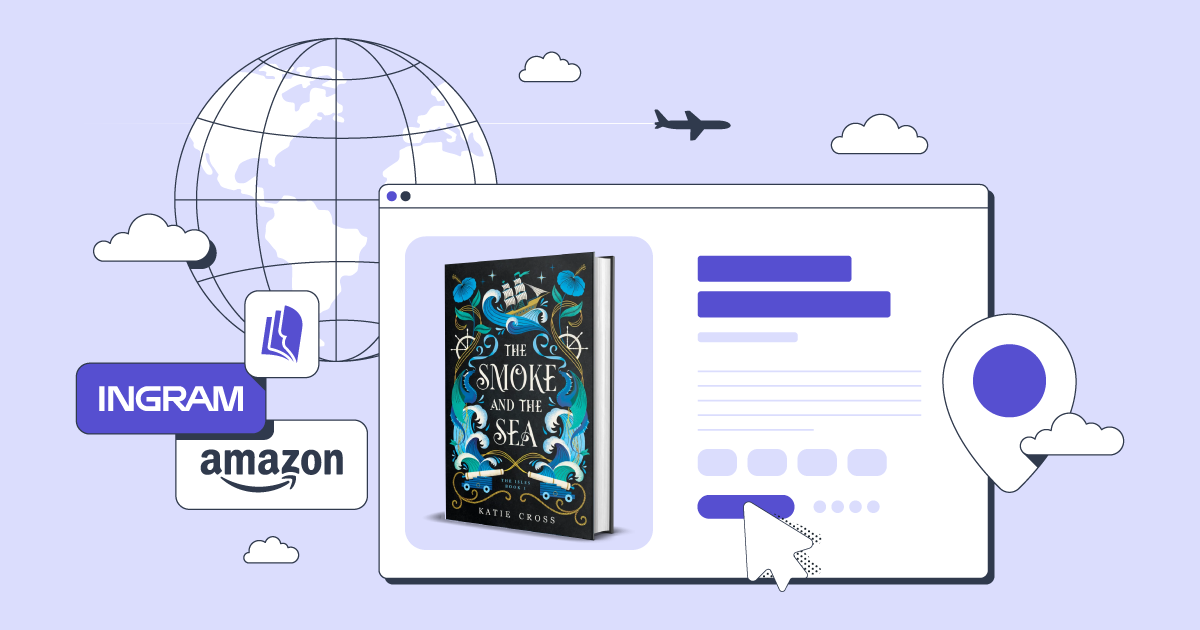
Before you pitch your book to bookstores, retailers, and libraries, you have to make sure that your book is available to those outlets. To do that, you need to understand how book distribution works and how to ensure your book is eligible for retail distribution.
Don’t feel like reading today? Listen to Matt & Lauren break down book distribution in Episode #114 of Publish & Prosper!
Book Distribution 101
If you’re confused about how distribution works, or confused about why your book doesn’t seem to be eligible or available for distribution, you’re not alone: distribution is confusing. Distribution is especially confusing if you’re new to the publishing industry, unfamiliar with the terminology, and/or trying to understand the different stages and players involved.
It definitely doesn’t help that some of the language used to describe distribution is interchangeable and overlapping with other industry terms. We’re only a few paragraphs deep into this blog post, and I’ve already used two different phrases, book distribution and retail distribution, to describe the same process.
So before we break down the steps of the distribution cycle, there are a few key phrases and players to know:
Retail Distribution vs. Global Distribution
In the Lulu ecosystem, retail distribution is the primary phrase used when referring to the distribution of books to third-party retailers and libraries. In the past, we’ve also used the phrase global distribution, which you may still see in some older educational resources and knowledge base articles.
Publisher vs. Distributor vs. Wholesaler vs. Retailer
Throughout the five stages (described below) of distribution, books will pass through several different outlets, including:
- Publisher → The original source responsible for publishing the book, whether that’s a traditional publisher like Penguin Random House, a small or indie press like Limelight Publishing, or a publishing platform like Lulu.
- Distributor → Works on behalf of publishers as the middleman between the publisher and the retailer. Distributors can manage warehousing, inventory, and fulfillment for publishers, but don’t usually own the inventory themselves.
- Wholesaler → The retailer for retailers. Wholesalers buy bulk inventory of books from publishers and retailers and resell them.
- Retailer → Online and brick-and-mortar purveyors of books, including Amazon, Bookshop.org, Barnes & Noble, Books-a-Million, Waterstones, and your favorite local indie bookstore.
Distributors and wholesalers do serve different purposes, but in reality, they often overlap. Many of the major worldwide book distributors like Ingram, Gardners, and formerly Baker & Taylor are also wholesalers… And yes, that does add to the confusion. For the purpose of this blog post, we’ll stick to just saying distributor.
Ingram vs. Ingram
Ingram Content Group is the largest book distributor and wholesaler in the United States, and one of the largest worldwide distributors. Any book, whether traditionally or self-published, being distributed through the US is likely being handled by Ingram Content Group, known colloquially through the industry as Ingram.
However, indie authors in particular might confuse Ingram with IngramSpark, the self-publishing company. In the context of retail distribution specifically, IngramSpark is the publisher; Ingram is the distributor.
Breaking Down the Distribution Cycle Into 5 Steps
Many different resources online cover the book distribution cycle, breaking it down into a nuanced step-by-step process that often reaches double digits. If you’re really curious about the minutiae of the process, go forth and dig deep into that content!
But for most indie authors just trying to understand how it all works—and where you fit into the cycle—we can boil it down to a high-level 5 steps. You’re welcome.
Step 1: Publisher Creates the Book Metadata
In the publishing industry, a book officially exists once it has been assigned an ISBN. In traditional publishing houses, that record is usually created well before the publication date. For self-published titles, that record is usually created at the time of publication.
Once a book has its ISBN, and the subsequent metadata attached to that ISBN, it is officially discoverable. A book that does not have an ISBN is virtually invisible to the entire distribution system and will be ineligible for retail distribution.
Step 2: Book is Listed with Distributors
Now that the metadata exists, the book can be listed with a distributor, making it discoverable to retailers. However, just because a book is assigned an ISBN and metadata does not mean it will automatically be added to distributor catalogs. The publisher needs to submit the book and metadata to the distributor.
It’s important to complete Step 1 and Step 2, and to confirm they’ve been done correctly and successfully, before making any efforts towards Step 3.
Step 3: Retailer is Made Aware of the Book
After a book has been successfully listed with a distributor, it is discoverable by retailers, but that discovery comes in many different ways.
For online retailers, this is automatic; they will systematically scrape their distributors’ catalogs for new titles and add the metadata to their online stores. While this step is automatic, it is not instantaneous; many indie authors have found themselves stagnating here while waiting for approval.
For brick-and-mortar retailers (and libraries), it’s a much more manual discovery process. This is where the pitch and promo efforts come into play. Traditional publishers often rely on sales reps to promote new and upcoming titles to bookstores; indie authors are responsible for pitching their own books directly. Booksellers will also pay attention to buzz on social media, write-ups in trade publications, unexpected bestsellers, and frequently requested titles.
Step 4: Retailer Orders the Book From the Distributor [Brick-and-Mortar Only]
Whether they’re interested in ordering inventory for the store or fulfilling a customer order, the retailer will search their distributor’s database for the title of interest and check for three things: availability, returnability, and wholesale discount.
If the book meets all three requirements per the retailer’s standards, they can now place an order through the distributor. Requirements may vary from retailer to retailer, but they are often that the book must be: available (obviously), returnable, and offered at a 40% (may be 30-50%) wholesale discount.
Step 5: Order is Fulfilled
The order is placed with the distributor and/or online retailer, who in turn passes it on to the necessary fulfillment channel.
Recently released and bestselling traditionally published books are often warehoused by distributors, in which case they (not the publisher) will handle order fulfillment. Print-on-demand titles will be fulfilled by the publisher and shipped directly to the bookstore or customer.
What Indie Authors Need to Know
On the surface, the distribution cycle is the same for traditionally published and independently published books, but how each step is managed—and who is responsible for it—can vary.
In general, retail distribution is baked into the overall publishing process for every single title released by a traditional publisher; all books are assigned ISBNs and appropriate metadata, meet standard distribution requirements, and are listed with distributors. The first two steps are always handled in-house. Step 3 may be partially the author’s responsibility, but with support from the publisher’s sales reps.
Indie authors, on the other hand, are responsible for managing their own book distribution. Here’s a checklist of what you’ll need to do if you’re publishing your book through Lulu and are interested in retail distribution:
Lulu Retail Distribution Checklist
- Before you publish, make sure that your book is eligible for retail distribution
Use our pricing calculator to make sure your binding type, trim size, and other design details are approved for retail distribution. Refer to this help article for other eligibility requirements, including interior content. - Secure an ISBN for your book
Either purchase your own from Bowker or use one of the free ISBNs Lulu provides during the publishing process. - Carefully fill out all metadata details
Make sure that your book’s metadata is thorough, accurate, and meets industry standards to maximize your discoverability and avoid potential distribution rejection. - Opt into Retail Distribution
When publishing your book, choose Global Distribution in the Select a Goal step. - Set a competitive and acceptable list price
Use our retail pricing calculator to ensure that your book is priced to have at least a 40% retail profit margin over the minimum print cost. - Confirm that your book’s distribution was approved
Search your ISBN in online databases like Ingram and online retailers like Bookshop.org to confirm your book’s availability (before pitching stores and libraries!). - Let the world know!
Pitch your book to booksellers and librarians! Ask your friends, family, and fans to request your book from their local stores! Get the word out there and watch the buzz grow!
Retail distribution isn’t for every author. If your book doesn’t meet eligibility requirements, or you want more control over your sales, Lulu offers plenty of other ecommerce options, including our Lulu Direct and API solutions and our very own Lulu Bookstore.
But if your publishing dreams include your book on bookstore shelves, retail distribution is a must. Hopefully, now it makes a little more sense!